
Putting-green construction
A putting green is built below the visible grass as well as shaped above it. Its rootzone must support turf, retain usable moisture and allow excess water to leave. The materials and drainage beneath the surface help determine how the green responds to traffic and rain.3
 View full photograph
Older American greens were often built from native soil or varied mixtures of soil, sand and organic matter. The USGA published its construction recommendations in 1960 as increasing play and expectations exposed the limitations of inconsistent materials and restricted drainage.1
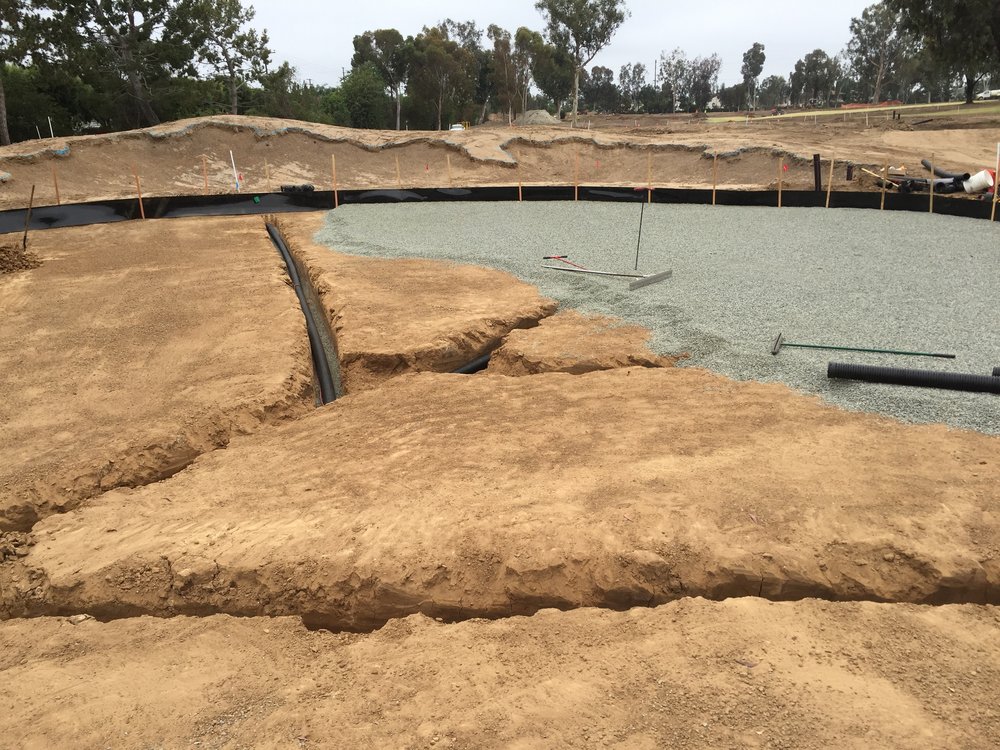
The 2018 USGA method specifies a drainage system beneath a gravel layer at least four inches thick, with a twelve-inch rootzone above it. An intermediate layer is required when the available gravel and rootzone particles do not meet the compatibility criteria.2
The layered structure does more than drain water quickly. It retains a reservoir of moisture above the gravel, commonly called a perched water table. The rootzone mixture influences both the water available to roots and the rate at which surplus water moves out.3
Construction also requires agreement among an architect, superintendent and builder. The recommendations call for laboratory testing when matching gravel to the rootzone. A green that contains sand is not, by that fact alone, evidence that the complete USGA method was followed.2
At a glance
Sources
- USGARevisions To USGA Putting Green Construction Recommendations
- USGA, preserved by Michigan State University LibrariesUSGA Recommendations for a Method of Putting Green Construction, 2018 Revision
- USGA Green Section Record, preserved by Michigan State University LibrariesUSGA Greens: 58 Years of Innovation and Counting