
Bermudagrass
Bermudagrass is a warm-season perennial widely used on golf tees and fairways. Its heat tolerance, resistance to wear and quick recovery make it useful on these heavily played surfaces.3
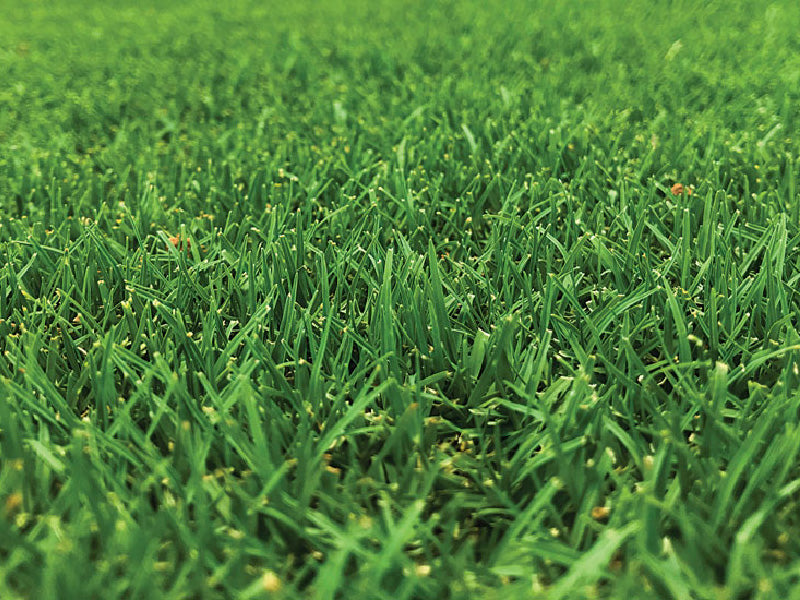 View full photograph
It spreads in two ways: stolons grow above the soil and rhizomes grow below it. Bermudagrasses thrive in hot conditions but generally struggle in shade. Winter browning can be seasonal dormancy; UGA describes this cycle for warm-season turf in Georgia.13
Common bermudagrass and the hybrids used in golf have related but distinct identities. Their names are not interchangeable.1
Common bermudagrass is Cynodon dactylon. The hybrids described here cross it with Cynodon transvaalensis. Unlike seeded common types, these sterile hybrids must be planted as living material, such as sod, sprigs or plugs.1
The breeding history includes Tifgreen 328 in 1956, Tifdwarf in 1965, and the fairway-oriented Tifway 419.245
Tifway was released in 1960. The distinction between cultivars matters: ultradwarf bermudagrasses are used on putting greens, while the broad term bermudagrass also covers turf used on other parts of a course. The name bermudagrass alone does not identify the playing surface.1245
At a glance
- Common bermudagrass
- Cynodon dactylon1
- Hybrid parentage
- C. dactylon × C. transvaalensis1
- Growth category
- Warm-season perennial3
- Golf use
- Tees and fairways3
- Botanical group
- Cynodon species and hybrids1
- Character
- A heat-tolerant grass widely used on tees and fairways.3
- Growth habit
- Stolons and rhizomes3
- Seasonal character
- Warm-season growth; winter dormancy in colder conditions1
- Tifway release
- 19601
Sources
- University of Georgia Cooperative ExtensionLawns in Georgia: Selection and Species
- USGA Green SectionA Turfgrass Timeline: The History of Bermudagrass Breeding
- NC State Extension TurfFilesBermudagrass: description and use
- USGA Green SectionThe Ins and Outs of Managing Ultradwarf Putting Greens
- USDA Agricultural Research ServiceBermudagrass for Turf