
Greenkeeping
Greenkeeping is the work of maintaining a golf course, extending well beyond the putting greens. The USGA traces that broader meaning to the older use of green for the course grounds. In the United States, golf course superintendent became the professional title for the role.1
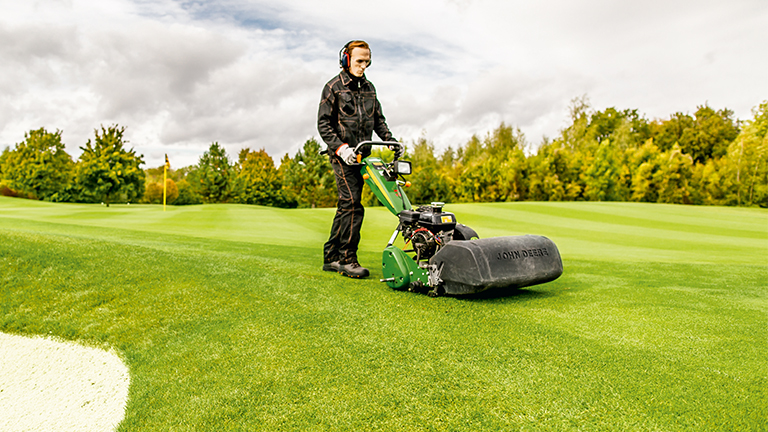 View full photograph
The work joins practical care with the study of living turf. Water, soils, fertilizer, equipment, plant diseases and insects all fall within the subjects the USGA Green Section has investigated. Producing a playable surface involves decisions about the growing environment as well as mowing.2
A documented turning point came in 1920. E. J. Marshall, the Inverness Club's green committee chairman, sought impartial agronomic information while preparing for the U.S. Open. The USGA and the U.S. Department of Agriculture agreed to collaborate, and the USGA created its Green Section on November 30.2
USDA scientists Charles V. Piper and Russell A. Oakley were appointed to lead the work. On February 10, 1921, they published the opening issue of the Bulletin of the Green Section. The publication gave practitioners a continuing place to find research results and course-care advice.3
The modern work still depends on observation. A USGA discussion of sand-based greens describes moisture meters for irrigation decisions and physical soil tests to follow organic-matter accumulation. Topdressing adds sand to dilute that material and help maintain a smoother surface.4
At a glance
Sources
- USGA Green SectionThe Word Green in Golf
- USGAGreen Section History
- USGAThe USGA Green Section Celebrates 100 Years of Impact
- USGA Green Section Record, preserved by Michigan State University LibrariesUSGA Greens: 58 Years of Innovation and Counting