
Sand greens
A sand green is a putting surface made from prepared sand rather than living turf. It belongs to a different construction tradition from a modern grass green rooted in a sand-based soil mixture. In one, the ball rolls on sand; in the other, sand supports the grass below.13
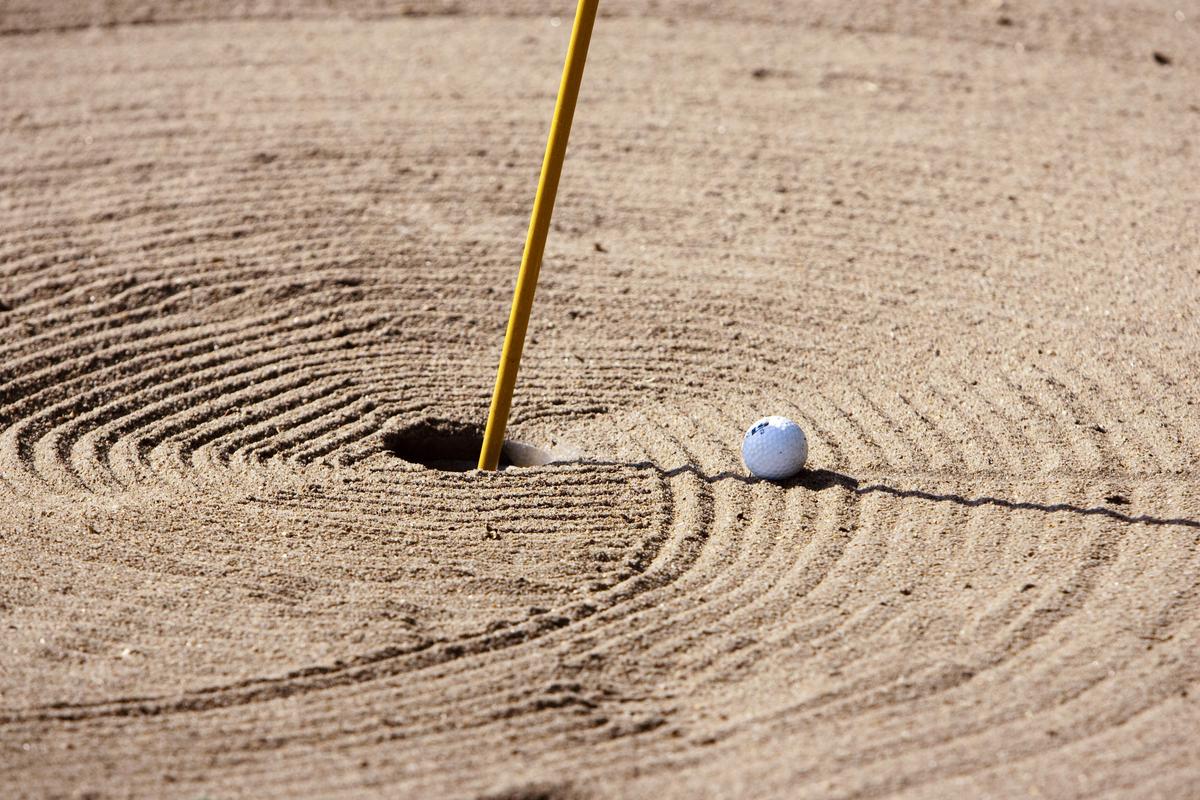 View full photograph
In the USGA's June 1921 Bulletin, Norman Macbeth described Southern California clubs using oiled sand greens for more than twenty years. He also recorded a gradual shift to grass greens where clubs could afford them.1
Macbeth described a compact base with a thin dressing of oiled sand. Greenkeepers dragged a broom in widening circles, making its marks cross a putt's line. Warmth could soften the surface and change its speed during the day.1
Conversion happened at different times in different places. A USGA history records Charleston Country Club opening its Belvedere course with sand greens in 1901, then replacing them with grass by 1913. That was the club's earlier site, before its move to James Island.2
The engineering vocabulary can obscure that history. The USGA's 2018 construction recommendations describe drainage, gravel and a sand-based rootzone for growing putting turf. A reference to sand beneath a modern green therefore does not establish that golfers ever putted on a bare sand surface there.3
At a glance
Sources
- USGA Bulletin of the Green Section, preserved by Michigan State University LibrariesMaking Putting Greens on a Southern California Golf Course
- USGAWomen's Amateur Adds To Charleston's Rich Golf History
- USGABeneath the Surface: New Recommendations for Putting Greens