
Links
Links describes a coastal landscape as well as the golf played on it. The USGA's historical definition emphasizes low-lying, sandy, largely treeless ground with undulations and dunes. The word therefore carries a more specific geographical meaning than simply any course with few trees.1
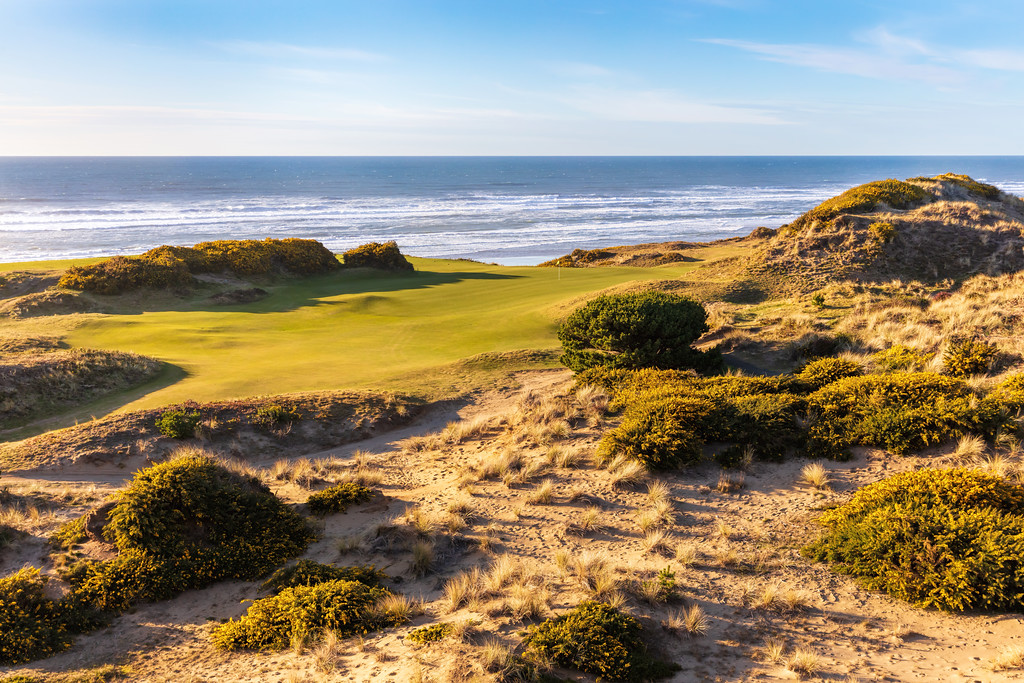 View full photograph
The land helped the game develop. The R&A describes the sandy soils and drainage of Britain's coastal ground as favorable to early golf. As golf spread, courses also occupied inland meadow, farmland and parkland, taking the game beyond its coastal setting.2
Open ground exposes players to changing weather. In a 2023 account for The Open, Rory McIlroy described firm, fast conditions and the need to adapt to wind. Those conditions can change how a player uses the ground and chooses a shot, even on a familiar hole.3
The landscape was not reserved exclusively for golf. The USGA describes linksland as relatively poor farming ground used for several sports from the Middle Ages onward. The R&A also notes that many early British links courses occupied public land.12
American courses have drawn on that model. A 2011 USGA account described Bandon Dunes on Oregon's sandy coastline as it prepared to host the U.S. Amateur Public Links and Women's Amateur Public Links on Bandon Trails and Old Macdonald. That dated example concerns a coastal resort; it does not classify every course in it as the same landform.4
At a glance
Sources
- USGAFAQ: Golf History Questions
- The R&AGolf Around the World 2017
- The Open / The R&AForged by Nature
- USGAResort excited to host APL, WAPL championships at same time