
Par
Par describes the score a scratch player would ordinarily be expected to make on a hole, with two strokes allowed on the green.2
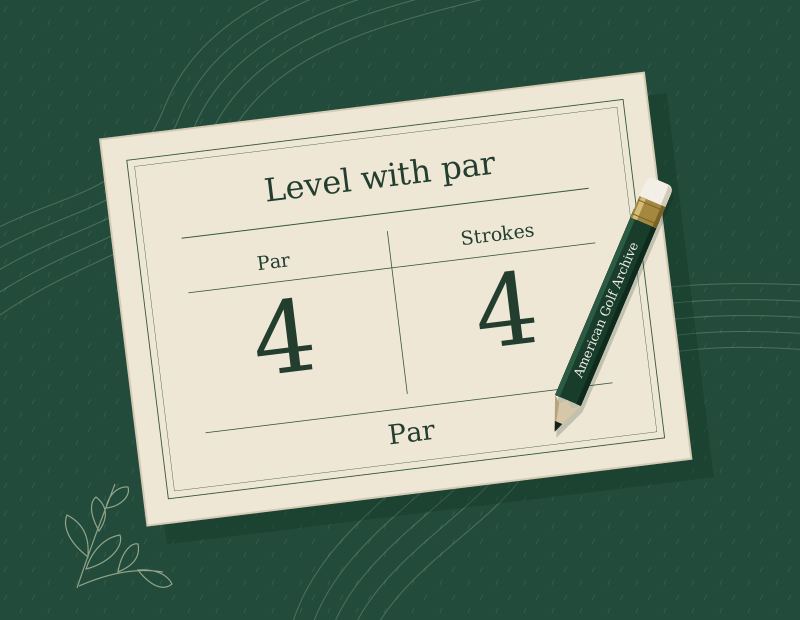
The modern definition assumes normal course and weather conditions. In the Rules of Handicapping, a scratch player has a Handicap Index of 0.0. Par gives the hole a scoring benchmark against which terms such as birdie and bogey are measured.12
The USGA dates its formal recognition to 1911. Its historical accounts also describe how par and bogey acquired distinct meanings.13
That distinction developed over time. The USGA describes late nineteenth-century British golfers using bogey for the standard a good player hoped to achieve. As American usage developed, par became the expert benchmark and bogey came to mean one stroke higher.4
Earlier conventions could look unfamiliar on a modern scorecard. The same history lists half-stroke standards, including par 3½, 4½ and 5½, among the distance-based values used around the turn of the twentieth century.4