
PING
PING began in Karsten Solheim’s garage in Redwood City, California. In 1959, his 1A putter made a distinctive ring when it struck a ball. The sound supplied the name.1
 PING
Mark unavailable
Solheim placed weight toward the heel and toe, the two ends of the putter head. The purpose was to help the head resist twisting. PING’s early story is rooted in that practical problem: how to make a putter behave more steadily through impact.1
In 1966, Solheim sketched the Anser on a record sleeve, then made a detailed graph-paper drawing dated January 13. According to PING’s history, Louise Solheim suggested dropping the “w” from “Answer” so the name would fit on the head.1
The drawing shown here comes from Solheim’s 1967 design patent. It records the shape of a putter in precise views, giving us a dated object to study alongside the company’s own account.2
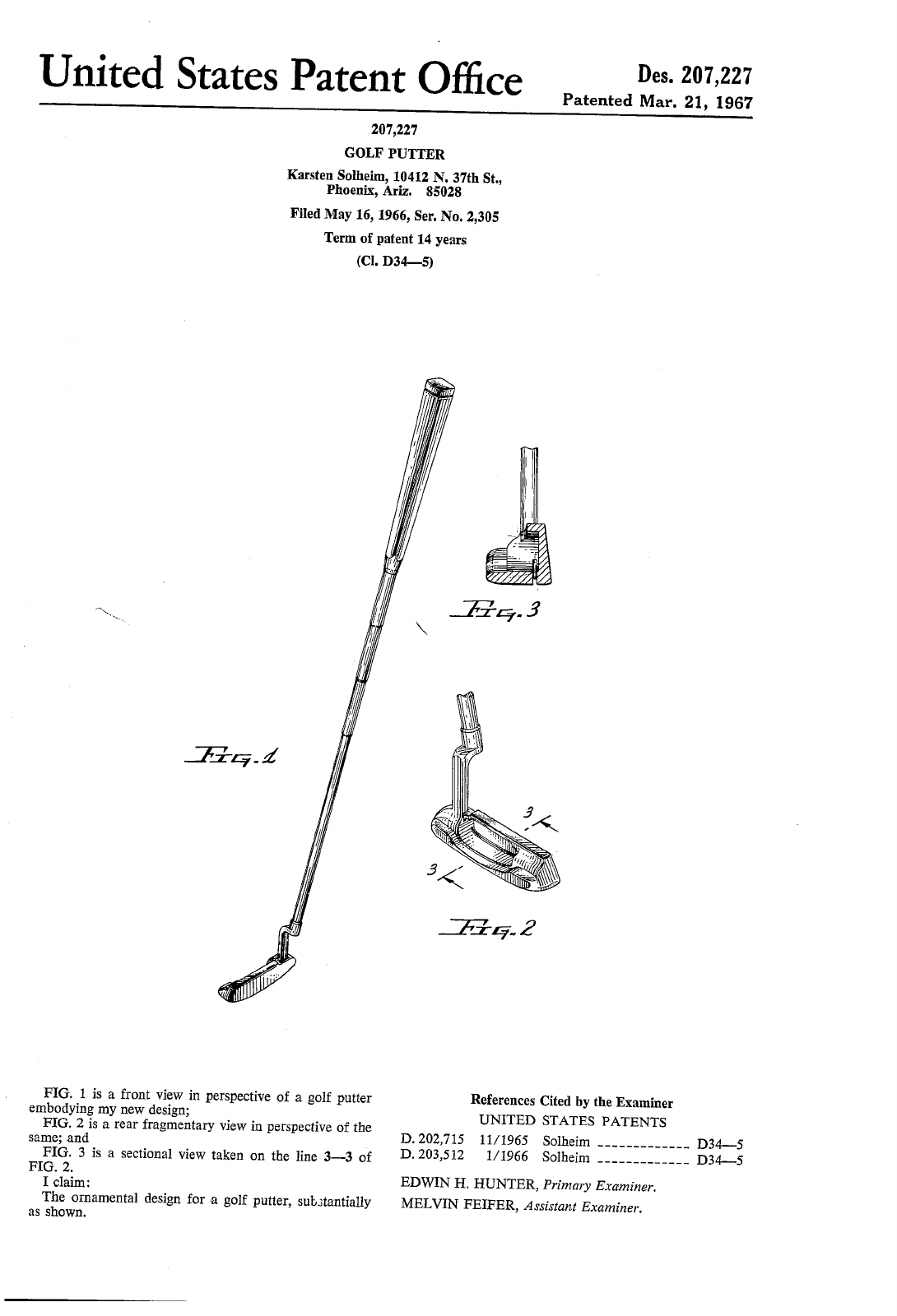 Karsten Solheim Golf putter · D207227
View patent sheet
At a glance
Sources
- PING PLD, official company history
History, Heritage and Legacy
The original page is currently unavailable. Related PING references:
- United States Patent Office, March 21, 1967; Google PatentsGolf putter, US design patent D207,227